Welcome back to Term 2. I hope you all enjoyed a happy and relaxing Easter break and that our students have returned rested and ready to focus on their studies to do their very best this term.
Professional Development During the holidays, Sue DeHaas (Head of Senior Mathematics), Dorota Cook (Head of Senior Science) and I attended a two-day professional development workshop titled “Teaching for Thinking” presented by Dr Peter Ellerton of the University of Queensland’s Critical Thinking Project. The session focused on how we can help students think more deeply and take a more active role in their learning.
This professional development gave us a clear guide of the skills needed to enhance depth and development in our student learning. It highlighted that the development of inquiry in student learning must be a combination of cognitive, values and virtues of inquiry and a solid content knowledge. By combining these, we can shift the classroom focus from simply “knowing facts” to “active questioning.” To support this, teaching will focus on four essential cognitive skills: analyse, explain, evaluate and justify. This will assist students to problem-solve using different perspectives and collaborate more effectively in the classroom. The session also highlighted the importance of structured teacher questioning – being more deliberate with how we ask questions to draw out more clarity, depth and relevance to the content matter.
We found the experience incredibly valuable and look forward to sharing these strategies with our staff to add to our teaching and learning practices at the College.
ANZAC Day Thank you to the many students and staff who attended the various ANZAC Day marches in the Mackay and District Community. I was very proud of our students who displayed so much pride in their uniform and respect for the many men and women who have served and continue to serve Australia and New Zealand.
Student Led Conferences Years 7 – 10 It was wonderful to welcome so many of our parents, guardians, and students to the recent Student Led Conferences at the Mercy Campus this week. These evenings offer a valuable opportunity for students, families, and teachers to collaborate and strengthen their partnership. They also serve as a meaningful way for parents to stay engaged in their child's learning journey.
Parent Teacher Interviews for Year 11 – 12 will be held on Thursday 14 May. Bookings via Parent Lounge are now open and will close on Wednesday 13 May at 10:30am.
Welcome to New Staff I would like to welcome Ms Alex Shepherd (Teacher) and Mrs Susan Macklin (Teacher Assistant) to the St Patrick’s College community. We are very happy to have you join us at our Mercy Campus.
Parent Engagement Evening I warmly welcome all parents and guardians to attend our Parent Engagement Evening in our Senior Campus Auditorium on Tuesday 5 May. The session will commence at 6pm with canapes served from 5:30pm.
Thank you to Mr Dean Andric who will present the St Patrick’s Academic Journey. If you would like to know more about how we guide students through their academic pathways to ensure their success, please come along and join us.
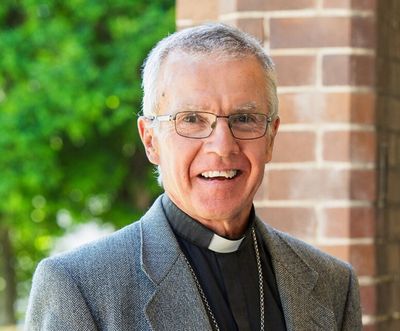
Bishop Danny Meagher Prior to Easter, it was announced that Bishop Danny Meagher would be appointed as the 11th Bishop of the Diocese of Rockhampton. We look forward to his formal installation on Thursday 28 May 2026, at 10:30 am at St Joseph’s Cathedral, Rockhampton. This celebration will be streamed live on the St Joseph’s Cathedral YouTube channel – https://www.youtube.com/user/StJosephsCathRton.
Bishop Danny comes to our Diocese with a reputation for deep pastoral care and a genuine commitment to community, and I am looking forward to working alongside him as we continue to grow our vibrant school mission.
As we prepare for this new chapter, we also pause to acknowledge Bishop Michael McCarthy, who is set to conclude his tenure. We remain deeply grateful for his twelve years of tireless leadership as our devoted shepherd and spiritual guide; his legacy of faith and service has left a lasting mark on our College community and the Rockhampton Diocese.
There will be a Diocesan Mass of Thanksgiving for Bishop Michael McCarthy DD at 5:00pm on Thursday 14 May at St Joseph’s Cathedral, Rockhampton. This event will also be livestreamed – https://www.youtube.com/user/StJosephsCathRton.
Year 7 Enrolment Interviews We look forward to meeting our prospective 2027 Year 7 students at our enrolment interviews being held on Thursday 14 May. Enrolment applications are open online at https://www.stpats.qld.edu.au/enrolment
Assistant Principal Students- Chris Sorbello
2026 St Patrick's College Bikeathon
As the 2026 Annual Bikeathon quickly approaches, we sincerely thank the parents and guardians who have already volunteered to assist.
Volunteers Required: We still require 30 more parent volunteers to ensure student safety. Roles include: * Manning checkpoints and intersections. * Keeping riders and walkers hydrated. * Cooking and serving the BBQ. * Managing the colour station.
If you are available to help but have not yet replied, please contact the College Office as soon as possible. Your support is vital to a safe and successful event.
Student Registration and Donations: ●Participants: Please log onto the Parent Lounge via Events and Payments by Monday 18 May. The registration fee is $15 (which also covers catering). ●Donations: If you aren't participating but wish to contribute, you can donate $15 via the Parent Lounge by Friday 22 May. ●Custom Amounts: To donate a different amount, please contact the College Finance Department at 4994 8700.
Note: All funds raised this year will support the Brekky Van initiative.
We look forward to seeing our students and parent volunteers come together to support the 2026 College Bikeathon which has been running since 1970.
If you have any further questions, please contact the College Office on 49948700 or email SPCM_enquiries@rok.catholic.edu.au
Tell Them From Me Survey
This term, our College is participating in the Tell Them From Me® (TTFM®) student survey. This survey provides valuable feedback on students' perspectives from years 7 to 12 about school life, their engagement, and the ways teachers interact with them.
The surveys are rigorously validated and developed by The Learning Bar, an organisation specialising in educational research and survey administration. These surveys gather crucial data that help enhance student learning experiences and overall school environment.
Key Points: ●The survey is confidential, and college staff will not be able to identify individual students from their responses. ●Participating students will receive a unique username and password to ensure confidentiality. ●The survey is online, takes 15 to 20 minutes, and will be conducted during school hours. ●Participation in the survey is voluntary. If your child feels uncomfortable with any question, they can skip it or stop the survey at any time. ●Teachers will remind students that they can talk to their teacher or guidance counsellor if they feel distressed or worried about the survey. ●The survey measures topics such as emotional and social well-being, physical health, and behaviours and attitudes that are predictors of student success. ●It also allows students to provide their thoughts and feedback through open-ended questions.
Language & History Departments - France Tour
France 2026: A Journey Through Language and History
Our French and History students have officially returned from an extraordinary expedition across France during the recent school holidays. This wasn't just a holiday; it was a vibrant extension of the classroom where textbooks were traded for cobblestone streets and historical landmarks.
From the bustling cafes of Paris to the somber battlefields of the Somme, our students immersed themselves in the culture, language, and heritage of a nation that has shaped so much of our modern world.
Highlights of the Journey The itinerary was a whirlwind of cultural discovery with a splash of historic and architectural enrichment:
* Iconic Architecture: Students stood in awe of the Eiffel Tower, explored the vast galleries of the Louvre, and marveled at the grandeur of Versailles, Notre Dame, and the majestic Château de Chambord.
* Living History: The group engaged in profound World War I learning experiences. Visits to the Sir John Monash Memorial Centre, the Villers-Bretonneux Military Museum, and various memorial cemeteries allowed students to pay their respects and reflect on the sacrifice of Australian soldiers.
* Culinary Adventures: Taking "bravery" to the next level, students sampled authentic French fare. While many stuck to world-class pastries and desserts, others stepped out of their comfort zones to try confit duck, steak tartare, and even escargot!
* Language in Action: There is no better way to learn than by doing. Whether ordering a pain au chocolat or navigating local museums and cathedrals, our French students grew significantly in their conversational confidence.
Special Moments from the students
🌟 One of the most talked-about highlights was a truly cinematic moment: Vienna serenading the crowds in view of the Eiffel Tower. - Staff
🌟"The gothic architecture is absolutely stunning and the food is incredible; I'll definitely have to go again someday " - Noah
🌟It was a great opportunity to practise communication in French. I thoroughly enjoyed looking at the architecture throughout the country and how it was influenced by history. - Victoria
🌟Loved the people I met during the trip and hope they learnt not to show up 30 minutes late - Mia
Beyond the Classroom International tours like this are transformative. Beyond the historical dates and vocabulary lists, these experiences foster independence, personal confidence, and a nuanced global perspective.
We would like to extend a massive thank you to the dedicated St Pat’s staff who worked tirelessly behind the scenes with World Strides to make this trip a reality. Finally, a huge "well done" to our students; your conduct was exceptional, and you represented the College with pride and maturity on the global stage.
St Vincent de Paul Committee - Ngaio Miller
Fundraising Update
The Vinnies Committee would like to extend a heartfelt thank you to everyone in our school community for your incredible support this term. Through your generosity and enthusiasm, we have achieved some amazing fundraising results for those in need.
Together with our Senior Campus, we are proud to announce that we raised an outstanding $2000 for Caritas Australia this term. These funds will go towards supporting vulnerable communities around the world through the important work of Caritas.
This fantastic total was made possible through several successful fundraising events across the term. Students and staff showed wonderful support by purchasing items and volunteering their time at our Valentine’s Day stall, enjoying delicious treats on Shrove Tuesday at our pancake fundraiser, buying snacks and drinks at the Aquatics Carnival, and finishing the term strong at our sausage sizzle on the last day of school.
Every purchase, donation, and helping hand made a difference, and we are so grateful for the generosity shown by our school community.
As we begin a new term, the Vinnies Committee will be shifting our focus to the St Vincent de Paul Society Winter Appeal, supporting those in our local community who may be doing it tough during the colder months. We look forward to your continued support as we work to make a difference closer to home.
To kick off the term, we will be holding a Mother’s Day Stall in Week 3 on Thursday 7 May at lunchtime. There will be a range of wonderful gifts available, with everything priced at $10 and under—perfect for finding something special for Mum, Grandma, or another important person in your life.
Thank you again for your amazing support. We look forward to another successful term of giving!
Student Counsellor - Molly Bettridge
Unpacking the Switch4Schools Emotion Wheel
The Fear Dimension Feeling anxious and feeling scared are both fear-based emotions. The difference is that feeling scared is equated with fear of something in the present, and feeling anxious is fear of something in the future. The reason that we split them into two is because they inspire different reactions in the body, and you do different things to manage them. Both, however, are closely linked to our instinctive survival reactions, the five f’s. The freeze, flop, friend, fight or flight reactions are immediate, automatic and instinctive responses to inescapable threat - even if that threat is only in our mind. Being able to understand and control these responses help us to determine how threatening something really is and make better sense of our experiences.
Anxiety – A Summary Anxiety is a stress response to something negative or dangerous that we think might happen in the future. It differs from scared which tends to be felt in response to something dangerous in the present. Anxiety can impact our breathing and our ability to sleep. Ruminating and constantly visualising potential future negative events can actually help make them happen, further fuelling anxiety.
When does it help? Anxiety can help us remain vigilant to potential threats and help direct attention to important things. Being anxious about school grades can help us focus on studying. Being anxious about health can help us exercise or eat a better diet. Only be anxious about the things you can control, and don’t fall into the trap of over-vigilance.
What happens inside my body?The stress hormones in your stomach can feel like ‘butterflies’, or even make you start to feel sick. This can be why anxious people eat comfort food or start to eat less, because they are trying to make their stomach feel good. As blood is directed away from your hands and feet, they can become clammy and sweaty. Your heart starts racing as it pumps blood to arms and leg muscles, often tiring them out due to over-stimulation and making you feel like you have no energy.
1. ATTENTIVE: The lower arousal end of anxiety is most useful, motivating us to focus on things that are important and solve problems that need solving. Attentiveness is when our brain identifies something that might be problematic in the future, but it’s not confirmed as a definite future problem - so we just monitor it.
a. Think of this like simply taking mental note of something that could become a future problem and keeping an eye on it to see if it changes. When riding a bike, it is important to be attentive to your surroundings to identify anything that could become dangerous, but rarely does it need anything more than this if you are on a leisurely ride. When cooking you are attentive to sounds and smells that could indicate something is burning, even if you are not visually focused on it at the time. This very low level of anxiety is very useful to navigating the world safely, when speaking in front of a group of people, monitoring your health, or to avoid procrastination.
2. FOCUSED: Once something changes from being a possible problem, to a probable problem, we move from attentive to focused. Here is when we direct our attention to fix something to avoid a future problem. It deserves your focused attention and if you start to lose control of the situation you start to feel apprehensive.
a. Being in this state of focus can sometimes be referred to as being ‘in flow’. There is enough stress to motivate you to lose yourself in what you are doing, without the task draining too much of your energy. When ‘in flow’, people often report losing track of time and being able to work non-stop for exceptionally long periods of time. In the workplace, keeping people in this light state of anxiety can dramatically improve productivity and even morale. People in this state often feel like their work is meaningful and report high levels of satisfaction when a job is complete.
3. CONCERNED: When things or issues start to feel out of control or uncertain, you can feel concerned It helps focus your unconscious mind to either monitor or solve problems while you are doing other things. A lot of concern tends to revolve around health, finances (resources), or relationships.
a. The act of being concerned means examining something in the present that could have a negative outcome in the future. You are concerned with things in your immediate control. If you are focusing on something that may only happen in the future you are more likely to be worried rather than simply concerned.
4. APPREHENSIVE: Apprehension is a mid-level arousal emotional state that focuses your attention on something in the present that you think is likely to become problematic in the future. Being apprehensive causes your brow to furrow and your attention to dart around a little to maintain alertness and avoid danger. Apprehension stems from being uncertain about consequences of actions.
a. Concerned and apprehensive can be useful emotional expressions of anxiety, which help you plan for unexpected events and deal with issues before they become major problems. Be careful not to fall into the trap that you can only be safe if constantly vigilant, which keeps us in higher expressions of anxiety, robs us of feeling good about being peaceful, and blinds us to good things in the present.
5. WORRIED: Worry is what you feel about a future event that you feel you have little or no control over. It has a relatively high energy state so the body will often move around (like pacing up and down) to release energy and stimulate thought. It is not healthy to remain worried, as it tends to concern things out of our control or imaginary future states.
a. Don’t worry, be happy. The popular song written by Bobby McFerrin holds a lot of truth. Even 2000 years ago it was written in the Bible, “Do not worry about tomorrow, for tomorrow will worry about itself. Each day has enough trouble of its own.” Most of the time and energy spent worrying is simply wasted energy. It’s good to have a plan and make yourself more resilient to future issues, but don’t let worry run the show. Direct your energy into things that will positively impact today
6. OVERWHELMED: When anxiety gets out of control, we become confused and overwhelmed. People in this expression of anxiety often need to seek external help to manage their anxiety and get back in control of their thoughts and actions. Overwhelmed is characterised by deep frowning, scattered and irrational speech, an inability to engage in certain social situations, insomnia, and an inability to quieten the mind.
a. People can be triggered into overwhelm and panic by projecting negative memories onto future scenarios, or even fear of being judged, failing, or looking unintelligent. Overwhelm and panic reduces performance and makes difficult situations worse. Learning to dial it back to concern is critical in its management.
7. PANICKED: When anxiety reaches its highest level, we panic. Panic is a high energy expression of anxiety and is often triggered by significant fear of a future or current event over which you have no control. The body becomes confused, paralysed with anxiety and starts to shut down to remain safe. Panic short-circuits rational thought and directs all energy toward your limbs and body movement to escape a threat.
a. The family of anxious emotions are important for us to guide our attention. However, overwhelm and panic are seldom useful - although sometimes last-minute panic about a looming deadline can inspire us to action! Focus on things you can control and never let your imagination consume you with thoughts about future events or scenarios out of your control. Reframing anxiety for excitement is a useful way of redirecting energy.
Scared – A Summary Scared is a very strong fear-based emotion that you feel whenever there is a threat (real or imagined) that you think will put you in danger. This danger could be either physical or psychological pain or harm. You can be scared of things (e.g. spiders, needles, or darkness) or of people who act in ways that trigger hurtful memories or put you in harm’s way (e.g. conflict or aggression).
When does it help? Have you heard of the fight, flight or freeze response? This is the instinct of what we are likely to do to help us survive when faced with danger. It is fear that helps drive this behaviour. Fear helps us be courageous in the face of danger, but our fears can also be debilitating if we don’t control them.
What happens in my body? You will be looking for threats, so your eyes and mouth open wide, and your senses seem to all focus on any threat. Your leg muscles get lots of blood ready for movement and can often start shaking with excess energy if we stay still. Blood also drains from the face and hands which is a way to signal to predators that we might be dead, causing them to chase others who look more ‘alive’. Often people will hide behind their hands to protect their face and vital organs from being attacked.
1. HESITANT: Hesitant is the lightest expression of scared. Hesitant is often experienced when embarking on a task or journey that is either unknown, new or triggers a negative memory (e.g. he hesitated before asking for more food, not wanting to look greedy). The danger is less obvious than when feeling nervous, but it still causes a moment to stop and think about an action and weigh up risks and rewards.
a. Hesitation can also come simply as a result of not knowing what to do and therefore being scared of doing the wrong thing or making the wrong choice. Good coaches know that creating hesitation or doubt toward an existing behaviour can be the most effective way to break habits and consider alternative options.
2. UNSURE: Being unsure can be a result of something internal or external. Here the fear becomes strong enough to question whether you are in the right place, at the right time, or in the right way. Often being unsure is not related to feeling unsafe, but about a lack of knowing what the right thing to do is.
a. Being unsure of yourself is a light fear. Most times it is bought on when you don’t know the rules of social engagement or acceptable behaviour, for instance the first time you are in someone else's home, when you are new to a class or work environment, or when you meet someone from an unknown cultural background. You don’t know if you’ll be accepted by their agreed rules, or whether they will abide by your social norms, and this hint possible of rejection makes us unsure of ourselves, motivating us to increase familiarity and understanding.
3. NERVOUS: Most of us are nervous when presented with new or novel situations. People also experience nervousness where the potential of a negative outcome is real, even if you have the confidence that success is probable. It is a stress response, producing the hormone adrenaline to help deal with a perceived or imagined threat, which can feel like ‘butterflies’ in your stomach.
a. Nervousness is normal and can be helpful. Ultimately, new challenges and opportunities help us grow. Nervousness is your natural preparation system for something outside your comfort zone. Accepting that it’s a completely natural experience, and reframing nerves as anticipation can help keep things in check and in control.
4. ALARMED: Alarmed is the gateway between the something being perceived as potentially dangerous, to most likely being dangerous. Being alarmed puts your emotional reactivity on notice, and you are on the edge of allowing your reactive brain to take over in order to get yourself somewhere safe. Alarmed takes a fair amount of energy, so is unhealthy to sustain for long periods.
a. When fear reaches this level your internal ‘alarm’ system starts to ring. This can be very good when we want to do activities like cross the road safely or make sure we don’t accidentally walk near a dangerous animal. Escaping the feeling of being alarmed safely can even be entertaining, with many people enjoying scary movies or stories that are alarming. Rarely do we enjoy things that tip us into states of fear higher than this, which can trigger traumatic memories and a genuine fear of being unsafe.
5. THREATENED: Threatened is a strong expression of scared and usually triggered when your psychological or physical safety is under threat. While the natural reaction to feeling afraid or terrified is to hide or run away, people tend to lash out when feeling threatened. People take a defensive posture, and express aggression on their face similar to anger (preparing to defend themselves).
a. In order to survive for as long as we humans have, our brain routinely tricks us into making two mistakes: overestimating threats and underestimating opportunities. This has been a great way to survive, but not so great for thriving in the modern age.
6. AFRAID: Being afraid is an extremely strong and potentially debilitating emotion, often expressed immediately prior to an activity or incident where the likelihood of a painful outcome is seen as extremely likely. Being brave is when people put aside this emotion and their own safety to help themselves or someone else avoid danger. When feeling afraid, legs tend to shake, arms and hands can feel clammy and cold, and eyes remain wide open.
a. Feelings of being afraid can help keep you be attentive to danger and risk when needing to be courageous. Controlling fear in this state usually consists of slowing down breathing, talking positively to yourself, and knowing when to remove yourself from danger. Being scared for a long period of time is exhausting. When afraid you’re not acting rationally but running on instinct.
7. TERRIFIED: Terrified is the strongest scared emotion. It describes an intense emotional state where fear becomes completely overwhelming. Usually causing people to run away or crouch in a fetal position to protect themselves from what they fear. Being terrified is crippling, and people who live a lot in this state of fear become extremely antisocial and unhealthy.
a. You can’t overcome a terrifying fear that remains in your subconscious. You must face it. Make the implicit, explicit. If you are in a safe place, turn toward your fear (not away from it), and curiously explore it. Awareness of the what and why something scares you helps overcome it. As always, make sure you are in a safe place — facing the things that terrify you doesn’t mean putting yourself in harm’s way or intentionally being around dangerous people.
In our next newsletter we will unpack the emotions that fall into the Wholeness Dimension – Happy and Sad.
Careers Advisor - Susan Mckay
Brisbane Careers University Trip
Final preparations are underway for the Brisbane Careers University Trip.
21 Year 11 and 12 students will travel to Brisbane and visit several universities both in Brisbane and at Gold Coast. The students will also be hosted by some of the residential colleges at UQ for breakfast or lunch, followed by a tour of these colleges to experience what campus living would be like!
The students will also tour Southbank TAFE and take a tour through Australian Country Choice, which is one of Australia’s largest beef manufacturing facilities. A behind the scenes experience watching the performers rehearse, viewing the horses and touring the catering facilities at Australian Outback Spectacular, will precede the performance, dinner and show.
The students will conclude this trip by attending the Careers Expo, which is the largest in Queensland. They will have to opportunity to engage with representatives from all Qld universities, Defence Force personnel and numerous businesspeople from all industry areas.
News from Universities ● Bond University: Scholarship applications open 1 May.
●Torrens University: Open Day is on 13 May. Early Entry applications are now open.
● CQU: Principal Recommendation Scheme opens in May, see Ms McKay if you are considering applying.
● All other universities do not open Early Offers until August.
● QTAC does not open until August.
Important Information: Year 12 students who are considering moving south to study at university and are requiring accommodation, are strongly encouraged to apply to the residential colleges now as places are limited and filling fast.
I have been advised that some residential colleges at UQ campus are only considering students who are preferencing UQ courses. Please contact the residential colleges to confirm if this is now their policy for 2027.
VET Coordinator - Helen Moohin
Career Connections – Your Next Direction
Together, We’re Building Futures Our students continue to amaze us with their enthusiasm, resilience, and passion for learning. At St Patrick’s College, we offer strong industry partnerships, hands-on experiences, and a wide range of vocational pathways tailored to students' individual interests. The future is bright for every learner, supported by partnerships between students, staff, parents, and our local community. Together, we foster learning, personal growth, and faith while recognising students as young adults. Students can explore various opportunities through the Career Connection page on our website, located under the Community tab.
Welcome to our latest update celebrating the incredible growth, achievements, and opportunities within our Blended Pathways program. This year is already shaping up to be one of our most dynamic yet, with students stepping boldly into vocational learning, industry partnerships, and real-world experience.
We offer 9 Vocational Areas - Endless Possibilities Our Senior Blended Pathways program continues to thrive, offering nine diverse vocational study areas that equip students with highly transferable, industry-ready skills:
● Construction ● Engineering ● Hospitality ● Health ● Fitness ● Business ● Tourism ● Laboratory Skills (Science) - preparing students for roles such as laboratory technicians, instrument operators, and positions in the sugar, health, and mining sectors. ● Ministry - strengthening faith, spiritual growth, practical ministry skills, administration, and community care.
These pathways empower students to explore their passions while building strong foundations for future career
Industry Partnerships Through GISP St Patrick’s College is proud to continue its involvement with the Gateway to Industry Schools Program (GISP), giving students hands-on exposure, industry insights, and teacher development opportunities across key sectors.
Our current GISP partnerships include: ● Aerospace - alliance with Austrian Aviation ● Mackay Manufacturing Hub ● QMEA (Queensland Minerals & Energy Academy) ● Health ● Tourism & Hospitality
These partnerships open doors to real-world learning and future employment pathways.
SATs - Students Earning While Learning School-based apprenticeships and traineeships continue to grow. Over the Christmas break we saw an unprecedented number of students transition into full-time apprenticeships. Congratulations to these students!
We remain committed to supporting all School Based Apprenticeship SAT students through our structured work experience program.
Highlights 🌟60+ students completed work experience in term 1. 🌟 120 Year 10 students will participate in work experience from 11-15 May, helping them explore career interests and secure future opportunities 🌟 Year 10 class successfully completed their White Card, enabling them to work on Queensland construction sites.
Current Apprenticeships & Traineeships Include: ▶ Glass & Glazing ▶ Plumbing ▶ Barbering ▶ Locksmithing ▶ Beauty ▶ Electrotechnology (Electrician) ▶ Engineering - Fabrication, Air Conditioning & Refrigeration, * ▶ Fixed & Mobile Plant ▶ Light Vehicle Mechanical ▶ Veterinary Nursing ▶ Early Childhood Education & Care ▶ Hospitality ▶ Pest Management (Business)
External Courses, Internships & Cadetships
◆ Hairdressing ◆ Animal Care ◆ Interior Design ◆ Fitness ◆ Real Estate ◆ Electrotechnology with Ergon ◆ Aboriginal & Torres Strait Islander Education
Certificate Skills: Hands-On Learning in Action Our Certificate programs continue to deliver exceptional learning experiences:
● Certificate in Health Incursion days were a huge success, with Year 11 students completing engaging, practical assessment tasks. ● Certificate in Laboratory Skills Students attended residential assessment days at CQU Laboratories - • Year 11:vone full day •Year 12: six days total
These experiences make our students highly employable in the sugar, coal, and health industries.
Coming soon: Health traineeship opportunities in Aged Care for students studying Certificate III in Health Services Assistance.
Certificate in Hospitality and Certificate in Tourism - alliance with QLD Tourism and Industry Council
Student opportunities for Industry Immersion days at local tourism events and behind the scenes opportunities.
What’s Coming Up
◆ QMEA Events ◆ Beakers, Bots & Build - 26 May at Whitsunday Anglican School ◆ Heavy Hydraulics - 18 August at St Patrick’s College ◆ Careers Trip ◆ Brisbane Careers Experience - 27-30 May ◆ Mackay Hospital & Health Services Engagement Program- 7-8 May & 30-31July ◆ A hospital tour (non Clinical areas) and a visit from a Paramedic with their response vehicle, Featuring presentations from: Medical Officers • Nursing • Midwifery • Mental Health • Medical Imaging • Research & Innovation • Occupational Therapy • Speech Pathology • Physiotherapy • Dietetics • Dental Plus: ◆ Tool Kit for Girls Mackay Engineering College - 29 May 2026 A fantastic opportunity for female students to explore Engineering, Electrotechnology, and Automotive trades, ask questions in small groups, and hear real stories from women working in the industry.
News From The College
Parent Engagement Evening - Navigating Your Academic Journey
We are excited to invite you to our upcoming Parent Engagement Evening focused on Navigating Your Academic Journey. This informative session will be held on Tuesday 5 May in the Senior Campus Auditorium, Gregory Street, Mackay. Parking and entry will be through Gregory Street. Light refreshments will be served from 5:30pm for a 6:00pm start.
Why Should you attend?
During this session, Mr Dean Andric – Assistant Principal Curriculum will present the St Patrick’s Academic Journey to discover how we guide students through their academic pathways, prepare them for QCE, and use innovative tools like TrackOne, explicit teaching strategies, and formative assessment to ensure every student’s success.
Every student’s academic path is unique and as parents and guardians, your understanding and involvement are vital in supporting your child's educational journey. This session aims to help you with valuable information and practical ways to help your student succeed academically.
We look forward to seeing you on Tuesday 5 May at our second Parent Engagement Information Session for 2026.
Gateway To Industry Schools
Students in the Certificate III in Business and Certificate II in Tourism classes recently had the valuable opportunity to hear from guest speaker Molly Dobbins from Gateway to Industry Schools on Tuesday 21 April.
Molly shared her industry knowledge and provided students with an engaging overview of the diverse career pathways available within the tourism sector. She highlighted how tourism extends across a wide range of industries, helping students better understand the breadth of opportunities that may align with their interests and future goals.
A standout feature of the session was the hands-on experience with virtual reality (VR) headsets. This interactive activity allowed students to explore different tourism roles in an immersive way, gaining insight into potential job responsibilities, working hours, and salary expectations.
The session was both informative and inspiring, offering students practical perspectives on careers in tourism. We sincerely thank Molly for her time and expertise, and we look forward to continuing our partnership with Gateway to Industry Schools to provide further excursions and real-world learning experiences that support our students’ career aspirations.
UQ Science Ambassadors Program 2026
The University of Queensland Science Ambassadors program has been run at St Patrick’s for the last eleven years. High achieving, motivated science students have been sharing their enthusiasm for science, helping with the Science Week activities, developing leadership skills and raising the profile of science in our college.
The Science Ambassadors for 2026 are: Maddison A, Hannah A, Paige B, Dale C, Sophia D, Carys F, Seb F, Amber J, Rexjan M, Mia P, Chloe P, Zoe R, Anthony S, Tadhg T, Holly W and Matilda W.
Congratulations to all of them!
Certificate II in Hospitility
It has been a busy and delicious term in the Hospitality department! Our senior students recently showcased their baking skills by treating the staff to homemade ANZAC cookies.
Looking ahead to May, the Year 11 cohort will undertake their SITHFAB021 (Provide Responsible Service of Alcohol) and SITHGAM021 (Provide Responsible Gambling Services) certifications. Completion of these modules will enable students for a future career in the Hospitality Industry.
To wrap up the month’s festivities, all Hospitality students will be crafting special sweet treats to take home for their Mothers and Grandmothers this Mother's Day.
QUT BlueShift Business Case Competition
Two teams from Senior Business recently represented St Patrick's College in the QUT BlueShift Business Case Competition, run by the Queensland University of Technology and designed to challenge secondary students with real-world business problems.
Year 11 teamCtrl Alt Elite - Alexis, Jenny and Abbey, and Year 12 team Innovation.exe - Dominic, Levi and Cooper each prepared and submitted a professional business case presentation as their competition entry.
Students were required to analyse a teen target audience, consider new Australian social media legislation, and develop strategies to effectively communicate the importance of CTP insurance to young people. Both teams participated in Zoom training with QUT lecturers and received guidance and support from Mrs Corry throughout the process.
Congratulations to all six students on taking on a challenge well beyond the standard classroom experience - we are very proud of your effort and professionalism.
BMX National Championships
Congratulations to St Patrick's College Year 12 student, Louis C who recently returned from Shepparton Victoria where he competed in the National Series Round 2 and National Championships. An outstanding performance saw Louis just missed out on the Australian team selection by 1 spot for 17-24 Cruiser Class.
Louis retained 7th place in the National Series Round 2 and is sitting in 4th place in the National Series for Cruiser Class.
We wish Louis every success later this month when he will have another chance to qualify for the Australian team which will compete at the UCI World Championships in Brisbane in July.