It is with a great sense of gratitude that I reflect on the wonderfully productive term we have achieved as a college community in Term 1.
On Tuesday and Wednesday, we gathered for our Easter Liturgies which provided a fitting conclusion to these busy weeks, allowing us a moment of reflection before the holiday break. As we celebrate Easter over the holidays, I would like to wish you all a safe, happy and holy Easter. May it be filled with joy and cherished moments with your family. I invite you all to take time in your very hectic lives to attend one of the many Masses that are being offered throughout our local parish churches during Holy Week, the Easter Vigil on Saturday night or the Easter Sunday Mass of the Resurrection of the Lord.
We look forward to welcoming all our students back, refreshed and ready to embrace the new term on Monday 20 April.
Year 11 Retreat Last week, our Year 11 students enjoyed their two-day Retreat which focused on reflection and personal growth. Students explored ways to deepen their relationships and cultivate the leadership skills needed for their final years of schooling.
We were deeply impressed by the maturity and respect shown throughout the program. Our thanks go to Michael Fitzpatrick for his expert facilitation in making this such a meaningful experience for everyone involved.
Enrolments for 2027 Following our successful Open Night, our 2027 enrolments continue to grow. We will commence interviewing for Year 7 in 2027 in Term 2. Our Enrolment Interview Day will be held on Thursday 14 May 2026 from 3:30pm – 7:00pm and then continue from there.
Please note enrolments are also available for other year levels.
Parent Engagement Session I invite all our parents and guardians to attend our Parent Engagement Session – Navigating Your Academic Journey. The session will be held on Tuesday 5 May, commencing at 6pm at the Senior Campus Auditorium. Mr Dean Andric will present the St Patrick’s Academic Journey to discover how we guide students through their academic pathways, prepare them for QCE, and use innovative tools like TrackOne, explicit teaching strategies, and formative assessment to ensure every student’s success. Following his presentation there will be a short open question section if you have any concerns. I hope you will be able to join us.
Rats of Tobruk As one of the four proud ‘Rats’ schools in Mackay, St Patrick’s College was honored to have our staff and students represent the college at the Rats of Tobruk Ceremony held at Queen’s Park. It was a significant occasion to commemorate the brave soldiers from the Mackay region who served with such grit and determination during the Siege of Tobruk in World War II.
Seeing our students engage so deeply with this local history ensures that the legacy of these resilient Australians remains a living part of our college identity.
Lest we forget.
Board Meeting Last night the board met and discussed the College School Improvement Plan. Our focus for 2026 is on the following areas:
If anyone would like to contribute with any suggestions for improvement, please email 326_principal@rok.catholic.edu.au
Assistant Principal Curriculum - Dean Andric
Celebrating a Wonderful Term and Looking Ahead
As we reach the end of Term 1, I want to extend my heartfelt thanks to all our academic staff and students for their dedication, energy, and commitment to learning. It has been a vibrant and productive start to the year, with classrooms alive with enquiry, creativity, and collaboration. Your ongoing effort truly sets the tone for all we do as a learning community.
For students, this is a great moment to pause and reflect upon your FA1 results. Ask yourself if your current study habits and approaches are helping you achieve your goals. If not, what can you adjust or refine? Remember, self-reflection is one of the most powerful learning tools you have. If you are uncertain or would like to talk through your progress, please reach out. Our academic team is always available to help you plan next steps and find strategies that work best for you.
Year 10 students, Term 2 will be an exciting and important time as you begin thinking about your senior subject selections. Be sure to attend the information sessions early in the term, as they will be invaluable in helping you make thoughtful, well-informed choices about your future pathways.
As we head into the Easter break, I hope everyone takes time to rest, reconnect, and celebrate the hope that this season represents. May your days be filled with peace and renewal after a busy and successful term.
“Charity is the soul of faith, it gives it life, without love faith dies.” — Pope Leo XIII
Assistant Principal Students- Chris Sorbello
Bikeathon - Sunday 24 May 2026
Let’s Not Be the Generation Where the Wheels Stop Turning! For 55 years, the St Patrick’s College Bikeathon has been more than a school event. Since 1970, it has been a shared experience, a rite of passage, a test of resilience, and a moment where our community comes together around our students.
In 2026, that tradition currently stands at a crossroads.
Without enough parent volunteers, the Bikeathon, a cornerstone of life at St Patrick’s, may not be able to continue safely. The thought that something so deeply woven into our school’s story could quietly disappear is deeply confronting to me.
This Can’t End on Our Watch Every Bikeathon that has run since 1970 has done so on the goodwill of families who stepped forward and said, “I’ll help”. Parents who stood at intersections, waved students through checkpoints, cooked the BBQ, offered encouragement, and ensured every rider and walker made it home safely.
Now it’s our turn.
Right now, we urgently need 60 more parents to help staff checkpoints and intersections. This isn’t about convenience, it’s about student safety. Without adequate supervision along the course, the event simply cannot go ahead safely.
When Everyone Thinks “Someone Else Will Help” It’s easy to believe the Bikeathon will happen whether or not you volunteer. Easy to hope someone else will fill the gap. But when too many people think that way, the gap becomes impossible to ignore along with our duty of care.
The reality is simple and powerful: Many hands really do make light work.
If each family gives a small amount of time, the burden is shared. If too many step back, the entire event is placed at risk of not happening.
Our Students Are Listening Students have shared thoughtful feedback, and changes have been made with them in mind: - A later start time to help them feel better prepared and a little sleep in compared to previous years - Ice blocks and lollies along the course, offering encouragement when they need it most
They’ve shown they care about the Bikeathon — now they’re relying on us to help make it possible.
More Than a Roster — A Community Moment Volunteering at the Bikeathon is about more than logistics. It’s about: - Standing shoulder‑to‑shoulder with other parents - Meeting new families and building connections - Showing our children what community service looks like in action - Being present in a moment that many students will remember long after they leave St Patrick’s
For many parents, the day becomes a highlight — a chance to feel truly part of the college, rather than just a name on a permission slip.
A Simple Ask. A Powerful Impact. We’re not asking for endless time or expertise. We’re asking for your presence.
By volunteering at a checkpoint or intersection, you are: - Protecting student safety - Supporting a 55‑year tradition - Ensuring future generations can say, “I rode or walked in the Bikeathon too.”
Let’s make sure the story of the St Patrick’s Bikeathon doesn’t end with us.
Please put your hand up. Get involved. Be counted.
Together, we can keep this proud tradition alive — and show our students what it truly means to belong to the St Patrick’s College community. Simply return your Parent Helper form that was sent home with your child or you can email or call the office directly and register to help.
We are looking forward to seeing as many parents as possible to help out on the day! Together, we can keep this great tradition rolling.
Assistant Principal Mission - Andrea Crocker
Reflecting On The Easter Season And The End Of Lent
As we mark the culmination of the Lenten journey and look toward the joyous celebration of Easter, we are reminded of the profound sacrifice and ultimate triumph at the heart of our faith. Lent is a season of reflection, repentance, and preparation, leading us to Easter Sunday, where the sorrow of the cross gives way to the hope of the Resurrection. This powerful transition - from darkness to light, from death to new life - is the central message of the Easter Season.
The Stations of the Cross Through Mary’s Eyes Our Year 7 Drama students brought this sacred journey to life with a deeply moving and reflective performance of the Stations of the Cross. This year's liturgy offered a unique and poignant perspective, as the entire narrative was told through the eyes of Mary, the mother of Jesus.
The students' sensitive portrayal of Mary's sorrow, courage, and unwavering love provided a powerful emotional anchor for the audience. By narrating the Stations from her point of view, the presentation highlighted the deep personal cost of the Passion, inviting us all to contemplate Jesus’ sacrifice not just as a historical event, but as a journey witnessed by those who loved him most. The young actors demonstrated remarkable maturity and reverence, honouring the weight and solemnity of the story.
We are incredibly proud that the Year 7 Drama students were able to share this meaningful liturgy with the entire college community. They performed the Stations of the Cross at both the Senior Campus and the Mercy Campus, allowing students and staff from all year levels to engage in this important Lenten reflection.
The power of their performance resonated strongly, serving as a perfect transition point from the penitential focus of Lent into the celebration of the Easter Triduum. Thank you to the Year 7 students for their dedication and to their Drama teacher - Mrs Hardwick - for guiding them in creating such a thoughtful and spiritually rich experience for our community.
Assistant Principal Welfare - Brendan Gunning
Student Leadership Exchange: St Patrick's and Mirani High
The College Captains from St Patrick’s College and Mirani High School recently met via Teams to discuss the nature of student leadership within their respective communities. The meeting provided an opportunity for the student leaders to compare their daily responsibilities, which primarily involve representing the student body at numerous events, liaising with school administration, along with chairing student council meetings. Both groups of captains noted that their motivation for applying for a leadership role stemmed from a practical desire to serve the school community.
The process of becoming a captain at both schools is structured and merit based. Candidates are required to submit written applications and deliver speeches to their peers as part of the process. This ensures that those selected have both the organisational skills and the support of the student body necessary to fulfill the role.
During the discussion, the captains explored what leadership looks like in a practical way. All captains have a focus that is based on service and community involvement, along with peer support and modelling a consistent example to students. The captains agreed that effective leadership relies on clear communication and a commitment to school values.
Student Counsellor - Molly Bettridge
Unpacking the Switch4Schools Emotion Wheel
The Release Dimension On the Switch Emotion Wheel, anger and excitement fall on the release dimension because it is how we most often release any emotional energy we have that is built up. Many people can become aggressive with high levels of fear, sadness or anxiety and are often mistaken for being angry. Other people can channel that high emotion into excitement. Neither is good or bad but choosing how best to let your energy out given the situation can be the difference between success and failure. Excitement can also be used to reframe high levels of anxiety or scared, a trick commonly used in high performance sports. Instead of being nervous or overwhelmed by an upcoming race, they are eager to get out there, full of anticipation, pumped for the challenge ahead. This redirects the energy toward a more productive mindset, increasing performance and interrupting unhelpful rumination.
Angry – A Summary Anger is a very strong, action-oriented emotion that can lead you to doing things that you may later regret. Physically lashing out at someone in anger can mean that you hurt someone, or say some pretty horrible and hurtful things. You mostly feel anger when someone has hurt you, or gets in the way of you doing something you really want to do.
When does it help? Anger can help us stand up for ourselves, protect ourselves and those we love, and help get us out of a dangerous situation. Learning how to be angry without flipping into fury, controlling and releasing the energy in a way that keeps your rational brain in control, is so important.
What happens inside my body? When we start to feel angry, our body directs blood to the hands and the chemical adrenalin is pumped to our arms and legs. This is our body readying ourselves to fend off an attack from an unfriendly, or remove something (or someone) that might be in the way of us getting to safety. Often when angry, we will clench fists or fold arms in response to the blood and chemicals pulsing through our body.
1. INDIGNANT: Indignant describes the lowest arousal of anger below annoyed. It is a light anger usually felt when you lose your dignity, or observe someone else unfairly losing theirs. This unfair treatment is first met with indignance, and if the issue isn’t addresses the perceived injustice can escalate quickly to higher levels of anger.
a. Being indignant results in someone saying, “I’m not sure that’s right” or, “that’s a bit unfair isn’t it?” It is usually shown in the face as a frown and looking directly at the thing or person who is judged to be acting unfairly. Importantly there is always a level of curiosity at this level, wanting to confirm if the unfairness is justified or if there may be a misinterpretation. This is a learning mindset. If one is convinced of a miscarriage of justice, anger will usually escalate to higher arousal levels.
2. ANNOYED: A mild and somewhat tempered version of anger. “I am annoyed at myself / someone else / something for interfering with my expectations”. Being annoyed can quickly turn into irritation or frustration if the thing (or person) you are annoyed at continues. If you are unable to confront or deal with the annoyance, over time it can lead to feelings of resentment.
a. Annoyance is a fleeting emotion that shouldn’t hang around for too long. Often it doesn’t register on your face or have a huge impact on your daily life. It tends to be an ‘eye rolling’ moment that goes as quickly as it comes. Learning to deal with things that you find annoying in people you love can require developing good negotiation skills.
3. IRRITATED: Irritated is a step up from being annoyed, but is still a relatively mild form of anger. When you are irritated you have a strong desire to remove the irritation—it is not something easily ignored. Irritations are a little painful, and the brain interprets pain as a warning signal for something needing to be fixed. If the irritation isn’t dealt with, people often get forthright or aggressive in an attempt to resolve the pain.
a. Constant irritation can make you impatient, and will turn into frustration if it distracts or is a barrier to you achieving something important. Often irritations are met with a stern frown. They are things that are small enough not to lose control over, but are too big to ignore.
4. FRUSTRATED: Frustration is where anger can start to boil over into something harder to control. Usually it is triggered when something gets in the way of achieving a specific goal or completing a task. “They couldn’t understand what I was saying, it was getting frustrating”. Frustration is an emotion that is very hard to suppress, and rarely considers future negative impacts of outbursts.
a. Frustration is a strong emotion that can often lead to lashing out physically or verbally. It can be more explosive if the frustrating ‘thing’ happens close to you achieving your goal, or when you’re desperate to get something (e.g. waiting in line for an hour to get some food, only to have someone push in front of you as you finally get to the counter).
5. FUMING: Fuming is a very strong emotion. It is often triggered by perceived social injustice, people ignoring you, people not keeping their word, forced change, or general disrespect. It is also strongly related to unforgiveness and revenge. When you are fuming you stop listening to anyone, get caught in long rants, and hold aggressive postures (like pointing, clenching fists, or shaking your head).
a. While it can still feel like you are in control when you are fuming, you are not. Your rational brain may be conscious of what you are doing (unlike furious), but awareness will have little to no control over your behaviour. Learning and practicing grace, humility, compassion and forgiveness is critical to controlling this emotion.
6. FURIOUS: Fury is an extremely strong expression of anger. People often lose control of their thoughts, actions or words when they are consumed with fury. People become furious when something about their core identity feels threatened. People who commit violent crimes often report ‘losing their mind’ in fits of rage, unable to even remember what they did or why they did it.
a. Your rational brain slips into a semi-conscious state as your entire body becomes engulfed in fury, with the impact of your uncontrolled behaviour often leading to deep remorse after you’ve calmed down. Work on dialing back you anger to annoyed when you can feel fury starting to creep up.
7. SEETHING: This is ‘white hot’ anger. Often people ‘spit’ words through clenched teeth, giving rise to the seething sound of hissing. However, most times people hide this anger away, cutting others off, disregarding them, or acting in passive aggressive ways.
a. Seething is an extreme expression of anger and one should refrain from speaking or acting out in this state. However, you also need to make sure you deal with the anger, and find ways to expel it so that it doesn’t percolate. Holding on to seething anger will lead to psychological pain, and will hurt you much more than the person your are seething over. While you may be able to put the seething anger out of you mind to focus on a specific task or goal, it will be in the background draining energy as you try to keep it suppressed. Being gracious, quick to forgive, and holding things lightly is a much better way to manage this level of anger.
Excited – A Summary Excitement, like anger, is how we often release energy. It’s a series of emotions that usually result from something in the future that amuses or interests you. You can feel excited about going on a holiday, falling in love, or seeing the sequel to a great movie. Excitement is related to happiness, but happiness is directed toward something happening in the present, whereas excitement is all about the anticipation of a future event.
When does it help? Excitement boosts motivation levels so we can be prepared. It also can be a helpful way to reframe anxiety — instead of being stressed about your upcoming event, you can think about being full of anticipation and excitement. This subtle mindset change can refocus your energy and increase performance (rather than the decrease we see with high anxiety).
What happens in my body? The heart will be racing and you may find yourself naturally jumping up and down, clapping vigorously, or even screaming in delight in an attempt to release the energy excitement brings. Blood pumps to all your ‘action’ muscles, allowing you to do activities (like dancing) for a long time. It can also stimulate creative and pleasurable thoughts about the future. Too much excitement can interrupt your sleep in similar ways to anxiety, so learning some ways to calm your mind before going to sleep can be good.
1. EXPECTANT: Being expectant is one of the most enjoyable emotions as it creates energy and joy through low levels of excitement. It is often articulated as “looking forward to” something - like a holiday, a party, or a new year. People who are expressing excitement via expectant feelings tend to be active and feel ‘lighter’, which is expressed through raised eyebrows and a slight smile.
a. Joy is often articulated as a mix of low levels of happiness and low levels of excitement. Learning what being expectant feels like, and then accessing that feeling whenever you need it, can be useful if needing to shift out of an anxious or sad state.
2. INSPIRED: Inspired is greater than expectant, and it is often mixed with a sense of wonder and enhanced possibility. Inspiration can come through beauty, symmetry, another person’s words or actions, or even the realisation that you can solve a problem. Feeling inspired is mostly associated with creating a better future.
a. Inspiration has long been used as a tool for motivation, partly because it is a strong enough emotion to nudge action, without draining too much energy. This means that someone who is inspired by something can remain on task for an extended period of time without getting mentally exhausted. This can become extremely powerful when mixed with other low arousal emotions such as focused (anxiety).
3. EAGER: Eager is more intense than expectant, but falls a little short of the higher arousal state of energetic. People who are eager will often clap or rub their hands to release energy, or ‘bob’ up and down on their toes. Eagerness is often experienced when an event that you’ve been looking forward to is about to happen, or you are impatient and desire to get to a destination or complete a task sooner than later. It is a great way to focus energy toward an action.
a. Saying you’re ‘eager’ (which leads to action and enthusiasm) can be an easy way of reframing worry or panic (which can undermine performance and sleep) or impatience (which can lead to frustration and anger). Learning how to feel and trigger eagerness is one of the superpowers of high performers.
4. ENERGETIC: Feeling energetic is more than simply being eager to do something—it is a high energy state that readies the body for imminent action. It is a proactive state that causes people to move quicker, or focus intently on what they are energetic about (often ignoring other inconsequential things). An energetic person has a happy but intense look, and speech patterns tend to be faster, louder, and more expressive.
a. Energetic is a highly contagious emotion as long as others are also energised by the same activity. If not, then people seeing your energetic state can view you as disturbing the peace or creating extra work. This is no reason not to be energetic, but be mindful of the impact on others and general politics of social environments where possible.
5. PASSIONATE: When you are passionate, you are excited almost to the point of being out of control. Often confused with fury (anger) due to its high intensity, passionate people can easily slip into frustration if someone, or something, is a blocker to achieving their passion. Other people are often attracted to passionate people because this level of energy can be contagious, temporarily lifting mood.
a. There is an element of passion that is not welcomed by others. As the arousal level suggests, people full of passion are not always in control of their actions, and can be blind to things that may hamper their future success. Others can see passion as simply over-opinionated or pushy. It is important to feel passionate about things at times (like if you are on stage performing, competing in sport, or arguing a political point), but knowing how to quickly dial it down and increase awareness is important so you don’t exhaust yourself or the people around you.
6. PUMPED: Pumped is a colloquial expression used to articulate high energy and excitement toward an imminent event or action. Unsustainable as a long-term emotion, it can be useful to rally behind a cause or put in extra effort where needed to win. The intense look of someone feeling pumped is reflected in furrowed brows, and often loud clapping or vocalisations (e.g. “Woohoo!” “Yeah!” “C’mon!”)
a. Music or motivational speeches before undertaking a daunting task can help get people ’pumped up’ and override fear and anxiety. Learning how to feel pumped can help overcome procrastination, particularly for a task that is boring or requires a lot of effort. Just be aware that trying to stay in this state for too long will be exhausting.
7. HYPER: Hyper (also called hyperactivity) is the most energetic and extreme expression of excitement and tends to be a result of an overabundance of internal energy that needs to be released. In a hyper state, people are loud, distractable and highly active. They can be socially disruptive and chaotic, and rarely focus on a particular outcome. Hyper can easily turn to anger if others try to mute or suppress the disruptive behaviour.
a. Being hyped for long periods of time is unlikely to result in good outcomes. When in a hyper state you lose rational control and you can have a significant negative impact on those around you without realising it. Learning to breathe, focus, and redirect energy toward more controlled expressions (like playing sport) can be a good way to keep energy high, without going over the top.
In our next newsletter we will unpack the emotions that fall into the Fear Dimension – Anxious and Scared.
Sports Department - Matthew Sanders
Mackay District School Sport (MDSS) Process
Due to the new Mackay District School Sport trial documentation processes introduced this term, please find below important information regarding the nomination process for Mackay District School Sport trials.
Once a sport trial opens for nominations, students are notified through daily Homeroom Notices and via the Student Cafe. Parents and guardians can also view these notices through Parent Orbit.
MDSS Trial Nomination Process:
1. Collect Trial Information Students are required to visit the Sports Office (at either campus) to collect the trial information bulletin and permission booklet.
2. Complete Documentation The permission booklet must be fully completed and signed by a parent/carer.
3. Submit Forms and Payment * The completed permission note must be returned to the Sports Office. * The levy payment is to be made at the Finance Office.
Important: Please do not return permission forms to the Administration Office, as the Sports Department must process these directly to finalise the student’s nomination. Submitting forms elsewhere may result in the nomination being missed.
4. Finalising Nomination Once submitted, the Sports Department will complete the school endorsement and officially nominate the student.
5. Trial Day Requirements Students must collect their signed permission booklet from the Sports Office prior to the trial and bring it with them on the day. Please note: students will not be permitted to trial without the permission booklet.
Capricornia / State Trial Process (Next Stages): If your child is selected into the Mackay District School Sport (MDSS) team or Capricornia team, you will be provided with (or emailed) an additional form for the next stage of trials.
1. This form must be completed and signed by a parent/carer. 2. Once completed, it should be returned to the Sports Office at either campus. 3. The Sports Office will then arrange the required school endorsement. Once completed, students are to collect the signed form from the Sports Office and return it to the team manager.
Absence Process (ALL TRIALS): If your child is representing Southern Suburbs, Mackay District, Capricornia or Queensland School Sport, it is the parents’ responsibility to advise the college of their child’s absence through Parent Orbit or by phoning the absentee number.
As some trials are held during school hours without staff supervision, we cannot currently confirm student attendance or provide notification for any absences. As a result, parents must advise the college of their child’s attendance.
If you have any questions regarding the process, please do not hesitate to contact the Sports Office.
News from the College
2027 Enrolment Key Dates
Rats of Tobruk Ceremony
On Tuesday 31 March, Mrs Janelle Agius, Mr Marcus McConnell, Mrs Carissa Morgan and Mrs Juliene Benson accompanied students to the Rats of Tobruk Ceremony held at Queen’s Park. This event is a commemoration of those brave soldiers from Mackay who were involved in Tobruk during World War II. These men held on against all odds and endured impossibly harsh conditions for an incredibly long period of time.
We paid tribute to their great sense of patriotism, their constant mateship and also acknowledged how they kept faith when all faith and hope seemed lost. Our students are involved in the service with the three other ‘Rats’ schools in Mackay.
Siege of Tobruk — 10 April 1941 – 7 December 1941 They shall not grow old, as we that are left grow old Age shall not weary them, nor the years condemn At the going down of the sun and in the morning We will remember them. Lest We Forget
A big thank you to the students who participated and proudly represented us at this event. As the next generation, we owe a debt of gratitude to the Rats of Tobruk. Lest We Forget.
Parent Engagement Evening - Navigating Your Academic Journey
We are excited to invite you to our upcoming Parent Engagement Evening focused on Navigating Your Academic Journey. This informative session will be held on Tuesday 5 May in the Senior Campus Auditorium, Gregory Street, Mackay. Parking and entry will be through Gregory Street. Light refreshments will be served from 5:30pm for a 6:00pm start.
Why Should you attend? During this session, Mr Dean Andric – Assistant Principal Curriculum will present the St Patrick’s Academic Journey to discover how we guide students through their academic pathways, prepare them for QCE, and use innovative tools like TrackOne, explicit teaching strategies, and formative assessment to ensure every student’s success.
Every student’s academic path is unique and as parents and guardians, your understanding and involvement are vital in supporting your child's educational journey. This session aims to help you with valuable information and practical ways to help your student succeed academically.
We look forward to seeing you on Tuesday 5 May at our second Parent Engagement Information Session for 2026.
Small Pens Big Dreams: Helping Hands Builds Success for PNG Students
Year 10 students from Saint Patrick’s College are proud to be continuing their support of Students in Papua New Guinea through their donation drive called Helping Hands.
Educational resources in PNG are limited, and expensive and school funding is at an all-time low, with parents often needing to purchase items such as desks and chairs for their students.
We are asking if members of our school community would be able to spare any unwanted stationary, uniforms, novels, school bags or sporting equipment for our drive. A donation bin will be located in the front office at St Patrick’s College, Mercy Campus. Items can be placed in these bins prior to Friday 18 June 2026.
Help educate a child today! Thank you for support.
Community News
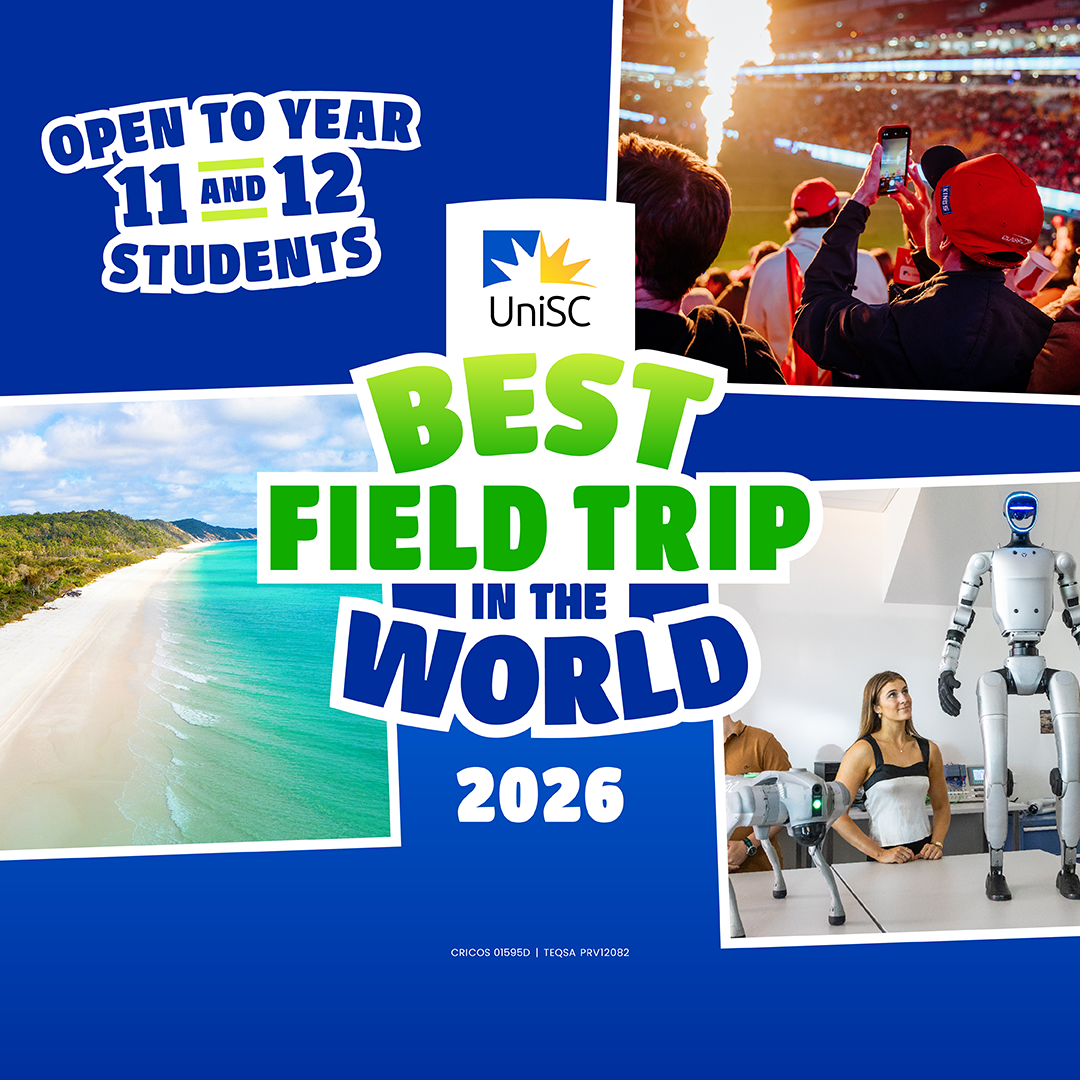
Best Field Trip In The World - UniSC
University of Sunshine Coast has three unique opportunities for their upcoming event in May 2026.
Oxford Royale is the most experienced academic summer school in the UK.
Their 2-week course will allow you to:
*Get an in-depth taste of a of a career area * Immerse yourself via debates, seminars, guest speakers, site visits etc (very experiential in style) * Learn about a top UK or USA institution and in the case of Oxbridge get a taste of living in a historical town * Have fun with students from all over the world – social activities including on the middle weekend are included (over 170 nations have attended) * Attend inspirational venues and exclusive events
Courses are catered for the 13–15-year-old and the 16–18-year-old categories, and include: