Parent Engagement Session – Navigating Your Academic Journey On Tuesday 5 May, we were delighted to host our second Parent Engagement Evening, "Navigating Your Academic Journey." A big thank you to those families who attended and contributed to the evening’s success.
Our Assistant Principal, Curriculum, Mr Dean Andric, walked us through the academic roadmap at St Patrick’s. He outlined how we tailor support for every student as they work toward their Queensland Certificate of Education (QCE). The session highlighted our use of TrackOne to keep a close eye on student data and growth, alongside our commitment to explicit teaching strategies, ensuring key concepts and skills are clearly and effectively delivered to every student. Also discussed was formative assessment, showing how consistent feedback gives every student the best chance at reaching their goals.
Ultimately, these evenings reinforce how powerful it is when parents and the College work together.
We look forward to seeing you at our next session on Tuesday 21 July – Parenting Teens with Insight and Empathy.
Parent Teacher Interviews – Senior Campus On Thursday evening, we hosted our Year 11 and 12 Parent-Teacher Interviews. It was wonderful to see so many families and students in attendance. These meetings are a vital part of building a strong partnership between home and school. We value the open dialogue shared and look forward to our continued collaboration as we support our senior students through this important stage of their education.
Year 7 2027 – Enrolment Interviews On Thursday, staff at the Mercy Campus met with prospective students for Year 7 2027 and their families. Interviews will continue over the coming weeks so I encourage anyone wishing to enrol in Year 7 2027 to submit their online enrolment application now.
Our first round of offers will be made on Wednesday 22 July 2026. Thank you to the many staff who have been involved in this collaborative process.
Opening and Blessing of New Buildings Our Support Services Centre has been completed and is now in full use. This centre is a permanent space for all counsellors, the Responsive Thinking Classroom, and the Learning Support team. Both the Mercy Hall and the Support Service Centre will be officially opened and blessed by Bishop Danny Meagher at 9am on Wednesday 24 June. More details will follow.
Senior Schooling Information Night Parents and students are strongly encouraged to attend our compulsory Introduction to Senior Schooling Information Evening on Tuesday 9 June 2026 at the Senior Campus Hall, River Street, Mackay. The session begins at 6:30pm (canapés from 6:00pm) and will run for approximately one hour.
This is an important session for all families as we explain the ATAR and Blended Pathway options, what they mean for your child’s future, and how the transition to senior schooling works. Understanding these pathways is essential to help students make informed subject and career decisions.
We will also clearly explain the senior syllabus, outline the transition process, and provide an opportunity for parents and students to ask questions and clarify any concerns.
Assistant Principal Mission - Andrea Crocker
Retreat Information
As you would all be aware, next week, our Year 7, 8, 9, and 10 students will participate in their compulsory annual Retreats. These important experiences are designed to provide a dedicated moment for connection, reflection, and growth.
Across all year levels, the programs focus on assisting students in recognizing their inner gifts and strengths, developing self-understanding, and building meaningful connections with their peers. The retreats address critical themes such as community belonging, acting with integrity, and developing a healthy sense of self-worth, purpose, and direction. We look forward to these experiences helping our students grow in all aspects of their lives.
Year 7 The Year 7 Retreat experience will be conducted by Az Hamilton from ‘Just Motivation’, whose aim is to educate, motivate and stir the hearts of individuals to connect with small ideas that can bring about BIG change in the world. The aim of this Retreat is to assist students to recognise their inner gifts and strengths. They will explore how they are called to use these gifts and the impact they can have through their actions and presence. Retreat activities will assist students to personally reflect on how they belong to a community, in particular the St Patrick’s College community, and engage in building stronger friendships with those around them.
Year 8 Students will have the opportunity for self-reflection and to develop stronger friendships with their peers during their annual Retreat days, to be held at The Event Centre, Mackay Turf Club. This two-day experience will be conducted by ‘Project Hatch’, a Brisbane-based Youth Retreat team who convene programs of various topics and themes in schools throughout Australia.
The aim of this Retreat is to assist students to recognise their inner gifts and strengths. They will explore how they are called to use these gifts and the impact they can have through their actions and presence. Additionally, students will look at, through various activities, the importance of acting with integrity and authenticity, which will enable them to make a difference to others.
Year 9 Students will have the opportunity for self-reflection during their annual Retreat which will be conducted by Ms Jo McDade from Retreats by Design. The Year 9 Reflection Days are designed to help students grow in self-understanding, build meaningful connections within their year group, and deepen their awareness of God’s presence. It provides a ‘sacred’ - a moment to reflect on who they are, who they are becoming, and how God is calling them to live with courage and heart. The program moves students away from the busyness of daily life to foster deeper awareness and community connection.
Core Objectives ● Self-Understanding: Helping students reflect on who they are and who they are becoming. ● God’s Presence: Inviting a deeper awareness of faith and the calling to live with courage. ● Community Building: Fostering meaningful connections between students, peers, and staff.
Year 10 With mental health and wellbeing of grave concern for many, it is especially important for adolescents to develop a healthy sense of self-worth, purpose and direction. Reflection Days are critical opportunities to address issues such as unleashing their full potential, finding direction and purpose through goal setting and dreaming, building and sustaining healthy relationships and avoiding the traps of addiction. This time is also an opportunity to establish and strengthen relationships with peers. Students will listen to the inspiring story and important advice of Glen Gerrayn and apply the concepts he discusses to their own lives.
I look forward to visiting classes next week to reflect with students on their Retreat experiences, and I invite families to also discuss with their students the important topics that will be covered in their Retreats.
Blessings to all, Andrea
Assistant Principal Students- Chris Sorbello
St Patrick's College Bikeathon
Our annual St Patrick's College Bikeathon rides off next Sunday from the Mercy Campus. We ask students to arrive at 9:15am and assemble in the Pavilion. Parents are asked to attend our Course Safety Briefing held in Central Block where you will be issued with a safety vest so you can be identified along the course. Julia from Queensland Police will also be giving instructions at this time as everyone's safety is our main priority.
Our duty allocation letter including our course map will be emailed out to all parents next week. Please look for your name so you are familiar with your position and please contact the office if your name is not on the list.
All students attending will be given a free soft drink and sausage upon their return to the College and every student participant has the opportunity to win the new bike worth over $1,000. We would like to thank Corry Cycles who have made a large donation towards this prize as our major sponsor again this year. Registrations will remain open right up until the event begins as we would love to see as many students participate in this community event, either riding or walking. The 2026 Bikeathon is certainly shaping up to be a lovely one thanks to all our volunteers, staff and participants.
Assistant Principal Welfare - Brendan Gunning
SchoolTV - Dealing With Conflict
Conflict is a natural and unavoidable part of family life. As children grow, differences in opinions, emotions and expectations can sometimes lead to tension at home, at school or with peers. While these moments can feel challenging, they also present valuable opportunities to teach young people important life skills. How conflict is managed within the family plays a key role in shaping a child’s ability to communicate, regulate emotions and navigate relationships.
For adult carers, supporting children through conflict means staying calm, listening with empathy and modelling respectful problem-solving. When handled constructively, conflict can strengthen relationships, build resilience and help children develop the confidence to manage disagreements in healthy and productive ways.
This edition of SchoolTV explores practical strategies to help families approach conflict with greater understanding and confidence.
A big thank you to everyone who supported the recent Mother’s Day Stall organised by Vinnies. It was wonderful to see so many students purchasing gifts for the special women in their lives and helping support a great cause at the same time.
All funds raised from the stall will go directly towards the Vinnies Winter Appeal, helping provide support to those in need during the colder months. Your generosity and kindness will make a real difference to families and individuals in our community.
We sincerely thank everyone who donated items, helped organise the stall, and supported the event through their purchases. Your continued support of Vinnies initiatives is greatly appreciated.
Head of Department: Jnr Science (acting) - Ngaio Miller
Year 10 Students Shine at Science and Engineering Challenge
A group of our Year 10 students recently competed in the 2026 Science and Engineering Challenge hosted at Holy Spirit College, and we are incredibly proud to announce that our team finished as overall winners for the day.
Despite being one of the smaller teams in the competition, our students stood out through their outstanding teamwork, communication, creativity and problem-solving skills across a wide range of activities. Throughout the day, students tackled challenges including Grab Lab, bridge building, eco houses, flight, wind turbines, fish traps and many more hands-on STEM activities designed to test both innovation and collaboration.
Despite winning the challenge, we did not score high enough to be top in the state. If we had been successful we would have earnt the opportunity to travel to Canberra to compete at the National Challenge Day.
The Science and Engineering Challenge continues to provide students with an exciting opportunity to explore real-world applications of science, engineering and technology while developing valuable teamwork skills. This incredible event is made possible through the support of James Cook University, the University of Newcastle and their many sponsors. We are extremely grateful for the opportunity to once again be part of such a well-run and inspiring competition that our college has proudly supported for many years.
Congratulations to all students involved on an outstanding achievement and for representing the college with such pride and enthusiasm. We are so proud of your efforts!
Student Counsellor - Molly Bettridge
Unpacking the Switch4Schools Emotion Wheel
The Wholeness Dimension We call this final dimension the wholeness dimension, because it is the reconciliation of these two families of emotion that give us a sense of wholeness. It is important to note that these are not opposites, but rather two colours that when combined indicate how ‘complete’ you perceive yourself to be. It is possible to be in grief, and at peace at the same time, discouraged and optimistic.
Sadness is simply our neurological response to loss. Our ability to deal with loss with low arousal versions of sadness (disappointed) and maintain a positive mindset holding low levels of happiness (peaceful) will point us to a long and fulfilling existence.
Happy – A Summary Happiness is the emotion we all like the most. It indicates we are calm and safe, which then allows us to feel things like love and connectedness. Happiness is not an emotion we can, or should, always be in, but finding ways to induce happiness can be very useful. Laughing for no reason can be a great way to inspire happiness in yourself and those around you.
When does it help? Happiness is the body’s way of regulating other strong emotions. This is why people often laugh after they’ve been scared at a sudden loud noise. Happiness also mitigates for extreme anxiety or sadness, but be careful - sometimes we need to feel the other emotions, and trying to make others happy when they are sad, anxious or angry can be uncaring and unempathetic.
What happens inside my body? Happiness is largely a reaction that happens in the brain and face. When happy, you can smile or laugh, and when mixed with a little excitement, can also result in clapping. You might see this after an amazing performance where people will stand, cheer and clap. Happiness produces an overall sense of lightness and peace, and can release dopamine in your brain to reinforce that something is good. When you are happy, all your worries seem to fade away, due to the chemical inhibitors that are also released.
1. PEACEFUL: The most restful form of happiness, peaceful, is the state that allows us the most control over our thoughts and actions. In a peaceful state, the brain is feeling safe, secure, confident and content with the present moment. When peaceful, all the muscles in the forehead and jaw relax, a soft smile emerges, and eyes are not fully open (there is no need to take in all environmental information).
a. This state is also the one experienced when people are working on something they love doing, simply because they want to do it (not because of an impending deadline or external expectations). When feeling peaceful, time can seem to fly past, as our internal time monitoring system is less active.
2. PLEASED: Pleased sits between the very low arousal of peaceful, and the slightly more intense happiness of optimistic. When we are pleased it is usually a level of happiness with a nice situation or a favourable outcome. The results haven’t necessarily exceeded your expectations, but you are pleased with the result. In this way, it is possible pleased can often be tinged with a hint of disappointment.
a. Pleased to meet you. Pleased to have achieved what we have achieved. Pleased that we are feeling better. When we are pleased we hold a small sense of hopefulness, and feel good about what we have achieved, or the situation we find ourselves in. The brain isn’t necessarily pumping dopamine (the feel good drug) into our system, but we are aware that things could be worse. In this way being pleased is akin to being grateful or thankful.
3. OPTIMISTIC: A slightly more energetic form of happiness than peaceful, optimism is all about hope and positive expectations of future events. When optimistic, people will often speak up more in group setting, and feel eager to ‘get stuck into things’ so they can reach the future state quicker and maximise the positive outcomes. Optimism can turn into irritation or frustration if someone seems to be undermining action with unrealistic negativity or worry.
a. Moving between optimistic, cheerful and peaceful is often an effective way to navigate many life situations where proactive energy is needed. Learning to find these emotional states and resist the temptation to move into an aggressive or fear emotion, helps us keep in control and be less reactive.
4. CHEERFUL: As humans we love to win, and cheerful is the emotion we feel when we are winning. Cheerful has more energy than optimistic, but is still in control of thoughts and actions (that can be lost in delighted and sensational). Medium levels of dopamine (the brain’s feel-good drug) are released when experiencing cheerfulness, resulting in a big smile and often some body movement to release energy (like clapping or thrusting fists in the air).
a. Cheerful, sensational and ecstatic are all emotions that are hard to maintain over a long period of time. Learning to experience these states for a time and then consciously dialling it back to an optimistic or peaceful state can be the key to feeling content and remaining within the family of happy emotions. Be careful not to use them to simply suppress other emotions. Remember, all emotions have their time and place.
5. DELIGHTED: The expression of delight is often mixed with a level of excitement and we are not always in control of our actions. When we are delighted to meet someone we often become unaware of others in a conversation, with our attention firmly fixed on the person we are delighted to meet. We are delighted when something unexpectedly good happens, or we meet someone we admire.
a. When we are delighted our brain releases serotonin and dopamine, two chemicals that make us feel good and immediately enhance our mood. The excitement that often accompanies delight causes our eyes to widen and our movements more pronounced (like shaking hands more vigorously, nodding, or having a slight ‘skip’ in our step).
6. SENSATIONAL: Sensational is sometimes referred to as being in a ‘blindly optimistic’ state. It is often experienced with an unexpected win, or at the beginning of something new and exciting (e.g falling in love). It can also be triggered by large groups applauding or recognising your achievements. It is a high energy state that can be exhausting after some time, which can lead to sadness while you recover mental energy and realign to reality.
a. It can be difficult to see the more extreme expressions of happiness as undesirable, but long bouts of sensationalism or ecstatic euphoria ‘overcooks’ the brain’s reward system and triggers the brain into a more depressed recovery mode.
7. ECSTATIC: Ecstatic is an expression of happiness most often reserved for events in life that are positive, unexpected, or that you have been looking forward to for a long time (like seeing your favourite performer on stage). Ecstatic is an extremely high energy emotional state, and people can feel depressed when coming down from a significant, ecstatic emotional state.
a. When you are ecstatic you are definitely not in control of your behaviours and actions. For some, fainting can be the result of being overly ecstatic, overwhelmed with the situation at hand, triggering a deep ‘sleep’ mode to recover. Enjoy moments of extreme happiness, but don’t stay there too long or work yourself into a frenzied state (where you may not remember much).
Sad – A Summary Sadness is often explained as the opposite of happiness. It is a feeling of sorrow and usually makes us want to be by ourselves or with people we know really well. Sadness is usually a result of loss, grief, change, disappointment or a feeling of helplessness (when it seems like you are unable to avoid a future negative outcome or event).
When does it help? We need periods of sadness for our brain to recover from losing something that we had, or thought we would have in the future. At a higher intensity level this includes the grieving process - our brain’s way of healing the mental trauma caused by unexpected loss events. Try not to completely isolate yourself when sad - stay connected to loved ones.
What happens in my body? When you are sad you can feel ‘heavy’, low in energy and not inclined to talk a lot with others. Often this means you want to lie down and sleep a lot. Sometimes your body will want to cry, which is what it does when it needs to relieve pain. You may not feel like eating much, and all the muscles in your face that you use to smile will relax. Your thoughts also tend to slow down and motivation levels seem to fade away. It’s okay to go there, just don’t stay there. Take the time you need, but let other people in who can share the journey with you—even if you don’t feel like it, it will be helpful.
1. DISAPPOINTED: Disappointment is a mild expression of sadness, and often felt when faced with unrealised expectations in yourself or others. “I am disappointed at my marks on my English exam”. People often close their eyes or look down to help shut out the world for a bit and allow attention to be directed internally. Disappointment is also often felt when someone’s self-worth is being questioned, or they feel embarrassed.
a. It can be necessary to allow yourself to be disappointed when you need to. Allowing yourself to be openly disappointed can indicate you are in a safe place, and simply in need of some time and space. Try not to get frustrated at people who crowd your space when you feel disappointed in yourself as this will only make you feel worse. Just realise they are usually just concerned about you and trying to show love.
2. DISCOURAGED: Discouragement is an expression of sadness that helps us recover from failure, pain, hurtful words, or unrealised dreams or expectations. Drooping eyelids, downcast eyes, lowered lip corners, and slanting inner eyebrows all indicate discouragement and hopelessness, with the facial expressions of hopelessness more pronounced.
a. Discouragement is often a temporary emotion that can be alleviated by an encouraging word, or moment of humour, that helps reframe our circumstance and re-insert confidence and self-belief. This is different from more intense sad emotions (hopeless, grief or despair), where this approach can be seen as unempathetic).
3. VULNERABLE: Between discouraged and dejected we reach a state of vulnerability. This is the shaky ground that you reach if the loss you are experiencing is related to self-assuredness, is big enough to have an impact on your daily life, and results in you not feeling as secure as you did before.
a. Vulnerability is triggered when we lose something that has previously provided safety. This could be realising we are not as competent as we thought we were, or someone who helped us feel safe is no longer available to us. Vulnerability is often coupled with anxiety, and the present feeling of vulnerability quickly triggers a worry for what might happen in the future. Separation anxiety is often treated by establishing safe spaces and relationships that make people less vulnerable in the present, and therefore not longer worried about their future safety.
4. DEJECTED: We feel dejected when we fall short of our own expectations, or realise that something we hoped for will not be a reality. This is not as strong as hopeless, as it is usually directed toward a specific event, situation or relationship, and opposed to a more broad sense of general helplessness.
a. At the point of dejectedness in the sadness scale we see increased activity in different parts of the brain such as the thalamus, the amygdala, and the hippocampus - all parts of our unconscious brain. The hippocampus in particular is strongly linked with memory, and it makes sense that these highly sad responses are imprinting an awareness of certain memories in our brain to warn us in the future. When we feel dejected we are on the edge of slipping into a state of depression that is not in our rational control.
5. HOPELESS: Hopelessness is a higher energy expression of sadness, and usually reserved for times where we feel powerless and worthless, or it can be felt following other high emotional states, such as ecstasy, panic or terror. Sometimes people cry as a way of releasing energy and processing memories and emotion. Often there is a need to be close to others, without the need to talk or engage — being connected and safe is enough.
a. Feeling hopeless without reason or explanation can often move you to grief or anguish as you don’t know how you got into the state, and therefore don’t know how to get out of it. Time and patience is often all that is needed to move out of this state, but spending too much time there can lead to the more intense expressions of grieving and despair.
6. GRIEVING: Grieving is often the result of significant change or loss of someone or something important to you. Often people who are experiencing grief will want to isolate from social contact, and keep themselves in dark, comfortable places to privately process their thoughts and situation. People can have unexpected bursts of crying, which releases built up energy.
a. The five stages of grieving are denial, anger, bargaining, depression and acceptance. Going through this grieving process is healthy, and necessary in relevant circumstances, but extended periods of grieving can actually lead to emotional trauma and periods of deep depression. Knowing how to sense when you need to move through the different stages can be the key to mental resilience and finding hope.
7. DESPAIR: Despair is a state where the mind and body are so activated by sadness that your brain shuts down. It is often triggered by extended periods of hopelessness or grief. Being in a state of despair causes physical changes in the brain, overwhelming entire thought processes and motivating people to isolate and sleep.
a. The persistent expression of extreme sadness, or loss of interest that characterises anguish, can lead to a range of symptoms including dramatic changes in sleep patterns, appetite, general energy levels, concentration, daily routines and self-esteem. Unlike grieving, even if you can sense when you need to kick out of despair into a lesser state, it can sometimes feel impossible to do. You can feel like you are simply lost in the dark and can’t find the light switch. If you think you are experiencing long periods of despair, it’s a good idea to see a doctor or psychologist for help.
In our next newsletter we will unpack the differences between feelings, emotions and experiences.
Sports Department - Matthew Sanders
2026 Cross Country Carnival
The 2026 Cross Country Carnival proved to be a fantastic day of competition, with students displaying outstanding spirit and strong house pride throughout the event.
The final house point standings reflected a well-earned victory, with the Year 12 girls playing a pivotal role in securing the win for their house. Argos finished in first place on 575 points, followed by Pindar with 447. Oraya claimed third with 415 points, narrowly ahead of Midas on 399, while Badilla finished on 353 and Triton on 332.
Congratulations to all students and staff for their enthusiasm, commitment, and contributions in making the day such a memorable occasion. A special mention also goes to the teachers who bravely took on the students in the races.
Our sincere thanks to the Sports Department team for their outstanding organisation and dedication, ensuring the event ran smoothly and successfully.
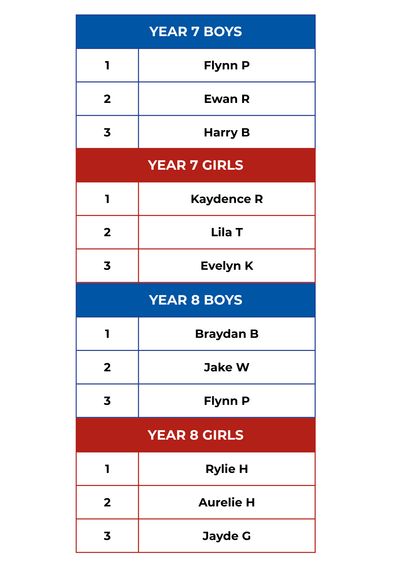
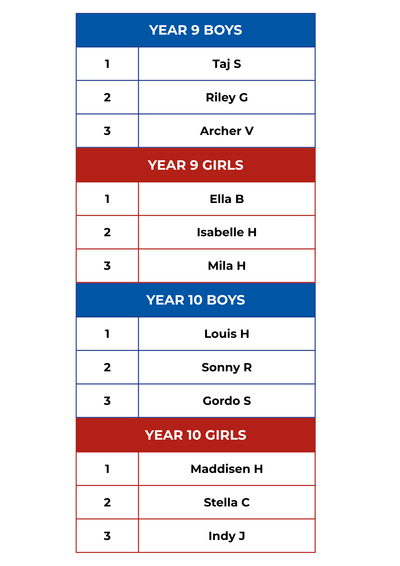
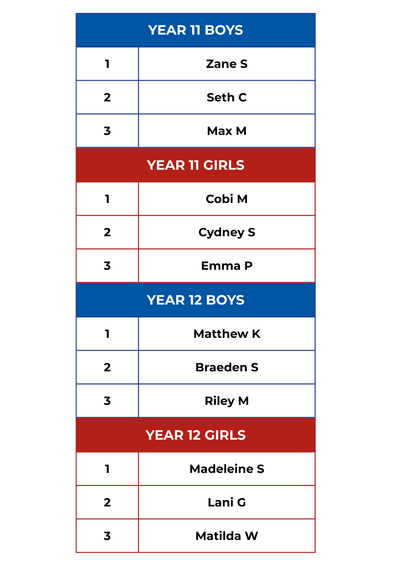
2026 AGE CHAMPIONS
Finance Manager - David McKie
College Fees Made Simple
College Fees Made Simple Life can be unpredictable, and sometimes keeping up with payments becomes challenging. If you’ve missed a payment—or if you’re finding it difficult to stay on track—please know you’re not alone, and support is available.
Looking to Set Up a Payment Plan? Where accounts were not paid in full in Term 1, all families are required to set up a payment plan with the College.
Payment plans were distributed to all families in Term 1 who requested them, but if you missed that email, it’s not too late to start your payments. If you’re experiencing financial pressure, we can tailor a payment plan for you.
Payment plans are designed to:
◆ Break down your balance into manageable instalments ◆ Provide predictability for your budgeting ◆ Reduce financial stress and uncertainty ◆ Ensures your child is eligible to attend trips and events representing the college.
Our team can work with you to create an arrangement that aligns with your current circumstances.
We’re Here to Help Open communication is the first step toward a solution. Whether you’ve missed a payment or would like to establish a new payment plan, we encourage you to contact us as soon as possible. If your financial situation has changed, a confidential conversation is the first step in determining if fee assistance is available to you.
By working together, we can find a practical and supportive way forward.
News From The College
Catholic Education Week
Cross Stitch Club
Come sail away with the Cross Stitch Club at Mercy Campus. 🪡 Every Thursday first lunch in C03. 🪡 All materials provided.
Lowes 5 Day Sale will be running from Wednesday 13 May - Sunday 17 May.
5 days only!
This is a great opportunity for families to save on schoolwear and essentials ahead of the busy term.
Kinetic School Bus Travel Information
Please find below important information regarding student travel on the Kinetic school bus services.
This information is for parents and guardians, particularly those who have children currently travelling or intending to travel on this school services who:
● are not yet registered for travel; and/or ● do not currently have a Smart Card.
To ensure students can travel safely and efficiently, all students are required to be registered and therefore issued with a Smart Card prior to using the service. The attached information outlines the registration process and next steps for families. Attached is also the Transport Me passenger app information, which parents can download to track their child’s smartcard usage.
If parents have any questions or require assistance, they are welcome to contact the Kinetic office directly on 4957 3330.